Arabah
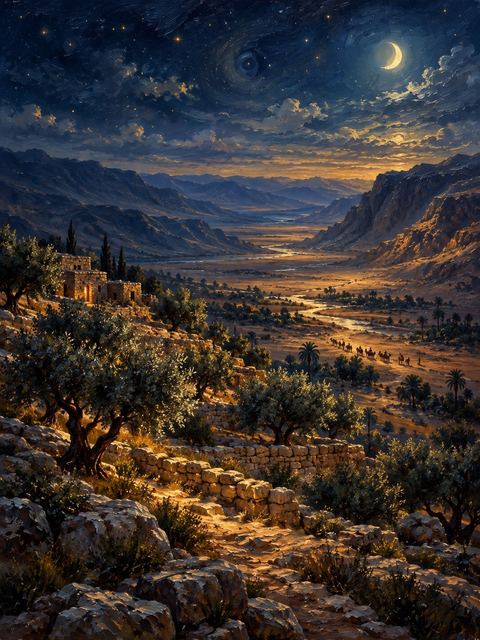
Where it is
32.03° N, 35.52° E
Mentioned most in
About this place
The Arabah, also known as the desert or plain, is a geographic region mentioned numerous times in the Old Testament. It refers to the elongated depression that runs from the Sea of Galilee in the north to the Gulf of Aqaba in the south, including the Jordan Valley and the area south of the Dead Sea.
In the book of Deuteronomy, the Arabah is mentioned in the context of Moses' farewell address to the Israelites, recounting their journey from Horeb (Sinai) to the Promised Land (Deu.1.1, 7; 2:8). The Arabah is described as part of the route they took and as a region they passed through.
The Arabah is also mentioned in the book of Joshua as a reference point for the boundaries of the tribal allotments (Joshua 11:16; 12:1, 3, 8; 18:18). It served as a natural border between the territories of the tribes settling in Canaan.
In the historical books, the Arabah is associated with events such as David's flight from Absalom (2Sa.2.29; 4:7) and the escape of King Zedekiah from Jerusalem during the Babylonian invasion (2Ki.25.4; Jeremiah 39:4; 52:7).
The prophets Isaiah and Ezekiel mention the Arabah in their prophecies. Isaiah speaks of the Arabah as a place of desolation (Isaiah 33:9), while Ezekiel envisions a future restoration where the waters flowing from the temple will bring life to the Arabah (Ezk.47.8).
The Arabah's arid climate and sparse vegetation make it a challenging environment. However, its strategic location along trade routes and its unique geological features, such as the Dead Sea, have made it a significant region throughout biblical history.
Every mention
Deuteronomy6 mentions
Joshua7 mentions
1 Samuel1 mention
2 Samuel2 mentions
Jeremiah2 mentions
What the dictionary says
Plain, in the Revised Version of 2 Kings 14:25; Josh. 3:16; 8:14; 2 Sam. 2:29; 4:7 (in all these passages the A.V. has “plain”); Amos 6:14 (A.V. “wilderness”).
Sources
- STEPBible TIPNR · Translators Individualised Proper Names with all References · CC BY 4.0 · github.com/STEPBible/STEPBible-Data
- OpenBible.info Bible Geocoding · CC BY 4.0 · www.openbible.info/geo/