Haman
Who he was
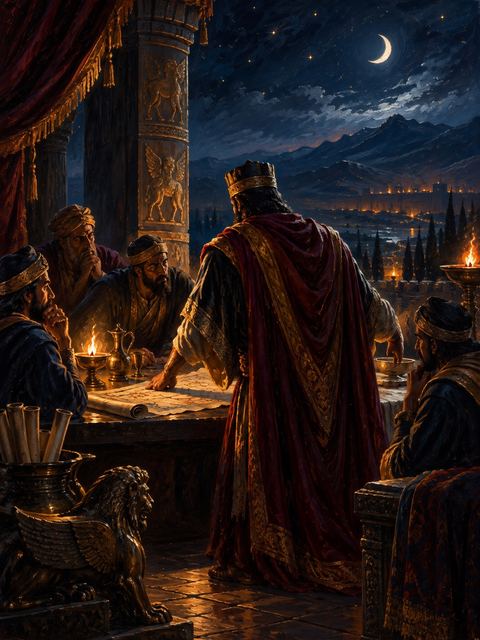
Haman is the primary antagonist in the book of Esther. He was an Agagite, a descendant of the Amalekite kings, and a high-ranking official in the Persian Empire during the reign of King Ahasuerus (Xerxes I). Haman was promoted to a position of authority and commanded all the royal officials to bow down to him (Esther 3:1–2). However, Mordecai, a Jew, refused to bow to Haman (Esther 3:2–4). Enraged, Haman plotted to destroy not only Mordecai but all the Jews in the empire (Esther 3:5–6). He convinced the king to issue a decree ordering the extermination of the Jews (Esther 3:8–15). Haman also had a gallows built to hang Mordecai (Esther 5:14). However, Haman's plans were thwarted by Queen Esther, who revealed her Jewish identity to the king and exposed Haman's plot (Esther 7:1–6). The king ordered Haman to be hanged on the very gallows he had prepared for Mordecai (Esther 7:7–10). Haman's ten sons were also executed (Esther 9:10–14). The king then issued a new decree, allowing the Jews to defend themselves against their enemies (Esther 8:1–14). Haman's story serves as a powerful example of how God can use individuals to protect His people and bring about justice, even in the face of great adversity.
Family
Every mention
Esther 45 mentions
What the dictionary says
(of Persian origin), magnificent, the name of the vizier (i.e., the prime minister) of the Persian king Ahasuerus (Esther 3:1, etc.).
Sources
- STEPBible TIPNR · Translators Individualised Proper Names with all References · CC BY 4.0 · github.com/STEPBible/STEPBible-Data
- Hitchcock's Bible Names Dictionary (1869) · Public domain