The BibleGospel Companion

Shiloh

שִׁלוֹ · shi.loh · H7887שִׁילֹנִי · shi.lo.ni · H7888“sent; peace; abundance” Hitchcock's 186936 mentions in 8 books, most in 1 Samuel (9)
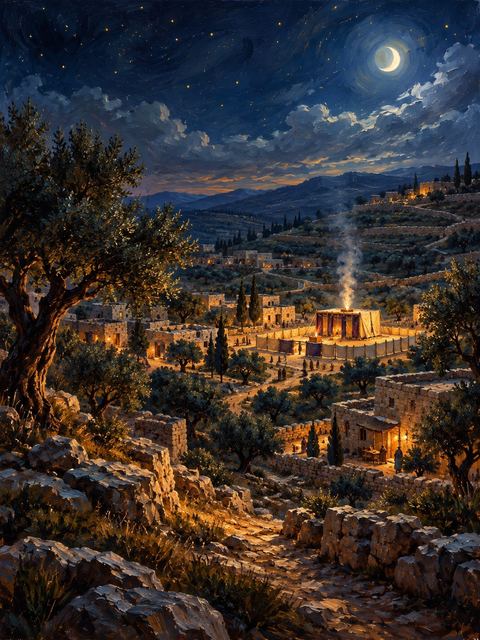
Illustration — not a likeness; generated for Gospel Companion in the app's painting style — Shiloh
Illustration — not a likeness; generated for Gospel Companion in the app's painting style

Where it is

32.06° N, 35.29° E

Coordinates and map: OpenBible.info Bible Geocoding · CC BY 4.0 · drawn without map tiles

Mentioned most in

Counted from 36 references · STEPBible, Tyndale House Cambridge · CC BY 4.0

About this place

Shiloh was an important religious center and assembly point for the Israelites during the period of the judges. After the conquest of Canaan, the tabernacle was set up at Shiloh, and it served as the central place of worship for the nation (Josh. 18:1; 19:51). It was at Shiloh that the land was allotted to the tribes of Israel (Josh. 18:8-10; 21:2) and where the Reubenites, Gadites, and half-tribe of Manasseh were dismissed to their territories east of the Jordan (Josh. 22:9, 12).

During the time of the judges, Shiloh continued to be a significant religious site. The tabernacle remained at Shiloh throughout this period (Judg. 18:31), and annual festivals were held there (Judg. 21:19, 21). It was at Shiloh that Hannah prayed for a son and dedicated Samuel to the Lord's service (1Sam. 1:3, 9, 24). The priest Eli and his sons ministered at the tabernacle in Shiloh (1Sam. 2:14; 3:21; 4:3, 4, 12), and the Ark of the Covenant was kept there until it was captured by the Philistines (1Sam. 4:3, 4).

Shiloh's importance declined after the Ark was taken and the tabernacle was destroyed (Ps. 78:60; Jer. 7:12, 14; 26:6, 9). The prophet Ahijah, who prophesied the division of the kingdom, was from Shiloh (1Ki. 11:29; 14:2, 4). The town was eventually destroyed, and its ruins served as a warning against disobedience to God (Jer. 7:12, 14; 26:6, 9).

Shiloh's significance in the biblical narrative lies in its role as a religious and political center during the formative years of Israel's history. Its central location in the hill country of Ephraim made it a convenient meeting place for the tribes and a symbol of their unity under the worship of the Lord.

Article: STEPBible, Tyndale House Cambridge · CC BY 4.0

Every mention

36 references, counted from STEPBible, Tyndale House Cambridge · CC BY 4.0 · verse text: World English Bible (public domain)
JoshuaChapter 18: 4 mentionsChapter 19: 1 mentionChapter 21: 1 mentionChapter 22: 2 mentions8 mentions
JudgesChapter 18: 1 mentionChapter 21: 3 mentions4 mentions
1 SamuelChapter 1: 3 mentionsChapter 2: 1 mentionChapter 3: 1 mentionChapter 4: 3 mentionsChapter 14: 1 mention9 mentions
1 Samuel 1:3This man went up out of his city from year to year to worship and to sacrifice to Yahweh of Armies in Shiloh. The two sons of Eli, Hophni and Phinehas, priests to Yahweh, were there.1 Samuel 1:9So Hannah rose up after they had finished eating and drinking in Shiloh. Now Eli the priest was sitting on his seat by the doorpost of Yahweh’s temple.1 Samuel 1:24When she had weaned him, she took him up with her, with three bulls, and one ephah of meal, and a container of wine, and brought him to Yahweh’s house in Shiloh. The child was young.1 Samuel 2:14and he stabbed it into the pan, or kettle, or cauldron, or pot. The priest took all that the fork brought up for himself. They did this to all the Israelites who came there to Shiloh.1 Samuel 3:21Yahweh appeared again in Shiloh; for Yahweh revealed himself to Samuel in Shiloh by Yahweh’s word.1 Samuel 4:3When the people had come into the camp, the elders of Israel said, “Why has Yahweh defeated us today before the Philistines? Let’s get the ark of Yahweh’s covenant out of Shiloh and bring…1 Samuel 4:4So the people sent to Shiloh, and they brought from there the ark of the covenant of Yahweh of Armies, who sits above the cherubim; and the two sons of Eli, Hophni and Phinehas, were there…1 Samuel 4:12A man of Benjamin ran out of the army and came to Shiloh the same day, with his clothes torn and with dirt on his head.1 Samuel 14:3including Ahijah the son of Ahitub, Ichabod’s brother, the son of Phinehas, the son of Eli the priest of Yahweh in Shiloh, wearing an ephod. The people didn’t know that Jonathan was gone.
1 KingsChapter 2: 1 mentionChapter 11: 1 mentionChapter 12: 1 mentionChapter 14: 2 mentionsChapter 15: 1 mention6 mentions
1 ChroniclesChapter 9: 1 mention1 mention
2 ChroniclesChapter 9: 1 mentionChapter 10: 1 mention2 mentions
PsalmsChapter 78: 1 mention1 mention
JeremiahChapter 7: 2 mentionsChapter 26: 2 mentionsChapter 41: 1 mention5 mentions

What the dictionary says

Generally understood as denoting the Messiah, “the peaceful one,” as the word signifies (Gen. 49:10).

Easton's Bible Dictionary (1897)
Read the article →

Sources