The BibleGospel Companion

Heth

חֵת · chet · H2845חִתִּי · chit.ti · H2850“trembling; fear” Hitchcock's 186958 mentions in 15 books, most in Genesis (18)
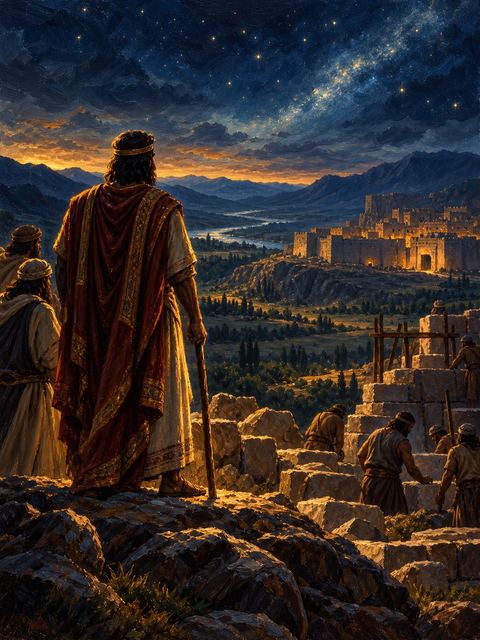
Illustration — not a likeness; generated for Gospel Companion in the app's painting style — Heth
Illustration — not a likeness; generated for Gospel Companion in the app's painting style

Who he was

Heth, also known as the Hittites, was a descendant of Canaan, the son of Ham, according to the Table of Nations in Genesis 10 (Genesis 10:15; 1 Chronicles 1:13). The Hittites were a prominent people group in the ancient Near East, and they are frequently mentioned throughout the Old Testament. Abraham had dealings with the Hittites when he purchased the cave of Machpelah as a burial site for his wife Sarah (Gen.23). This cave later became the burial place for Abraham, Isaac, Rebekah, Leah, and Israel (or 'Jacob') (Genesis 25:9–10; 49.29-32; 50.13). Esau, Isaac's son, married two Hittite women, which caused grief for his parents (Genesis 26:34–35; 27.46). The Hittites are listed among the inhabitants of the Promised Land that God would drive out before the Israelites (Exo.3.8,17; 13.5; 23.23,28; 33.2; 34.11; Deuteronomy 7:1; 20.17; Joshua 1:4; 3.10; 9.1; 11.3; 12.8; 24.11; Judges 3:5; 1 Kings 9:20; 2 Chronicles 8:7; Ezra 9:1; Nehemiah 9:8). During the time of the united monarchy, the Hittites are mentioned in connection with David's reign, particularly in the story of Uriah the Hittite, one of David's mighty men (2Sa.11; 23.39; 1 Chronicles 11:41). Solomon had trade relations with the Hittites and even married Hittite women (1 Kings 10:29; 11.1; 2 Chronicles 1:17). The Hittites are also mentioned in the prophetic books as a point of comparison or as part of a list of nations (Isaiah 1:1; Ezk.16.3,45).

Article: STEPBible, Tyndale House Cambridge · CC BY 4.0

Family

Family relations: STEPBible, Tyndale House Cambridge · CC BY 4.0

Every mention

58 references, counted from STEPBible, Tyndale House Cambridge · CC BY 4.0 · verse text: World English Bible (public domain)
GenesisChapter 10: 1 mentionChapter 15: 1 mentionChapter 23: 7 mentionsChapter 25: 2 mentionsChapter 26: 1 mentionChapter 27: 1 mentionChapter 36: 1 mentionChapter 49: 3 mentionsChapter 50: 1 mention18 mentions
Genesis 10:15Canaan became the father of Sidon (his firstborn), Heth,Genesis 15:20the Hittites, the Perizzites, the Rephaim,Genesis 23:3Abraham rose up from before his dead and spoke to the children of Heth, saying,Genesis 23:5The children of Heth answered Abraham, saying to him,Genesis 23:7Abraham rose up, and bowed himself to the people of the land, to the children of Heth.Genesis 23:10Now Ephron was sitting in the middle of the children of Heth. Ephron the Hittite answered Abraham in the hearing of the children of Heth, even of all who went in at the gate of his city…Genesis 23:16Abraham listened to Ephron. Abraham weighed to Ephron the silver which he had named in the hearing of the children of Heth, four hundred shekels of silver, according to the current…Genesis 23:18to Abraham for a possession in the presence of the children of Heth, before all who went in at the gate of his city.Genesis 23:20The field, and the cave that is in it, were deeded to Abraham by the children of Heth as a possession for a burial place.Genesis 25:9Isaac and Ishmael, his sons, buried him in the cave of Machpelah, in the field of Ephron, the son of Zohar the Hittite, which is near Mamre,Genesis 25:10the field which Abraham purchased from the children of Heth. Abraham was buried there with Sarah, his wife.Genesis 26:34When Esau was forty years old, he took as wife Judith, the daughter of Beeri the Hittite, and Basemath, the daughter of Elon the Hittite.Genesis 27:46Rebekah said to Isaac, “I am weary of my life because of the daughters of Heth. If Jacob takes a wife of the daughters of Heth, such as these, of the daughters of the land, what good will…Genesis 36:2Esau took his wives from the daughters of Canaan: Adah the daughter of Elon, the Hittite; and Oholibamah the daughter of Anah, the daughter of Zibeon, the Hivite;Genesis 49:29He instructed them, and said to them, “I am to be gathered to my people. Bury me with my fathers in the cave that is in the field of Ephron the Hittite,Genesis 49:30in the cave that is in the field of Machpelah, which is before Mamre, in the land of Canaan, which Abraham bought with the field from Ephron the Hittite as a burial place.Genesis 49:32the field and the cave that is therein, which was purchased from the children of Heth.”Genesis 50:13for his sons carried him into the land of Canaan, and buried him in the cave of the field of Machpelah, which Abraham bought with the field, as a possession for a burial site, from Ephron…
ExodusChapter 3: 2 mentionsChapter 13: 1 mentionChapter 23: 2 mentionsChapter 33: 1 mentionChapter 34: 1 mention7 mentions
NumbersChapter 13: 1 mention1 mention
DeuteronomyChapter 7: 1 mentionChapter 20: 1 mention2 mentions
JoshuaChapter 1: 1 mentionChapter 3: 1 mentionChapter 9: 1 mentionChapter 11: 1 mentionChapter 12: 1 mentionChapter 24: 1 mention6 mentions
JudgesChapter 1: 1 mentionChapter 3: 1 mention2 mentions
1 SamuelChapter 26: 1 mention1 mention
2 SamuelChapter 11: 5 mentionsChapter 12: 2 mentionsChapter 23: 1 mention8 mentions
1 KingsChapter 9: 1 mentionChapter 10: 1 mentionChapter 11: 1 mentionChapter 15: 1 mention4 mentions
2 KingsChapter 7: 1 mention1 mention
1 ChroniclesChapter 1: 1 mentionChapter 11: 1 mention2 mentions
2 ChroniclesChapter 1: 1 mentionChapter 8: 1 mention2 mentions
EzraChapter 9: 1 mention1 mention
NehemiahChapter 9: 1 mention1 mention
EzekielChapter 16: 2 mentions2 mentions

What the dictionary says

Dread, a descendant of Canaan, and the ancestor of the Hittites (Gen. 10:18; Deut. 7:1), who dwelt in the vicinity of Hebron (Gen. 23:3, 7).

Easton's Bible Dictionary (1897)
Read the article →

Sources