Exhibit X — A Silent Witness
The Shroud of Turin
A length of ancient linen bearing the faint, full-length image of a scourged and crucified man. For a century, science has examined it and largely deepened the mystery rather than solved it. We weigh it honestly — the evidence for, the evidence against, and what it cannot prove.
“Then cometh Simon Peter… and seeth the linen clothes lie, And the napkin, that was about his head, not lying with the linen clothes, but wrapped together in a place by itself.” John 20:6–7 · KJV
- 14 ft 5 in
- of linen
- 1898
- first photograph
- 1978
- STURP examines it
The Cloth
A negative, centuries before photography
A single sheet of herringbone-weave linen, about 4.4 by 1.1 metres, carries faint front-and-back images of a naked man — laid head-to-head, as a body wrapped lengthwise — scourged, crowned with thorns, and crucified. The image is a straw-yellow discoloration of only the topmost fibres. It is so faint that up close you can lose it entirely.
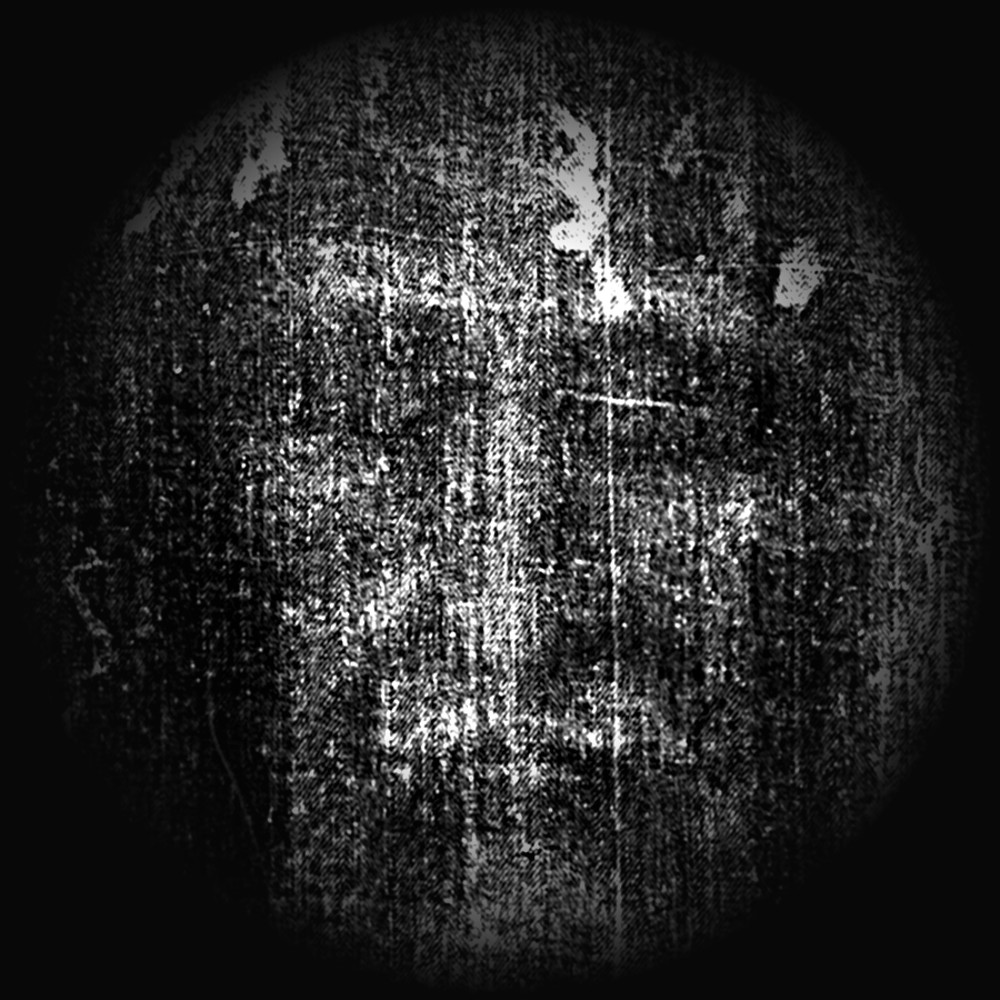
On 28 May 1898, Secondo Pia was permitted to photograph the Shroud. Developing his glass plate in the dark, he later wrote, he was overcome as the face appeared: his photographic negative showed a positive — a coherent, lifelike face. The image on the cloth behaves like a photographic negative, its light and dark reversed — an effect no medieval forger is known to have understood, or could even have seen before photography.
Photograph: Giuseppe Enrie, 1931 (public domain).
The Centerpiece
The image that stands up
In 1976, scientists John Jackson and Eric Jumper placed the Shroud image under a VP-8 Image Analyzer — a device that converts brightness into height. A photograph or painting, fed through it, collapses into a flattened, distorted smear, because its light and shade encode illumination. The Shroud did something no picture does: a coherent three-dimensional face and body rose out of it. Its brightness does not encode light — it encodes distance, the gap between cloth and body at every point. Lift the image below and see for yourself.
The relief here is generated live in your browser from the public-domain 1931 photograph, by the same principle Jackson and Jumper used: image brightness → height. Jackson, Jumper & Ercoline, Applied Optics 23 (1984).
What am I looking at?
This face is a three-dimensional relief built from nothing but the Shroud’s own brightness. Try the same trick on an ordinary photograph and you get a warped, half-melted mask — because a photo’s light and shade record illumination, not shape. The Shroud records something no photograph does: distance. Where the linen lay closest to the body — the tip of the nose, the brow, the cheekbones — the image is most intense; where the cloth fell away — the eye sockets, the temples — it fades. So when a computer turns that brightness into height, a correctly-proportioned human face stands up out of the flat cloth. That is exactly what John Jackson and Eric Jumper found in 1976 on a VP-8 Image Analyzer — an analogue image processor, invented in 1972, whose display turns brightness into height. Peter Schumacher, who built the units and installed this one, never saw another image do it: “Only the Shroud of Turin has produced these results from a VP-8 Image Analyzer isometric projection study.” It remains the single hardest feature for the “medieval painting” theory to explain: no known artist encoded depth he could not see, six centuries before anyone could measure it.
The Wounds
A textbook of Roman crucifixion
Forensic pathologists who have studied the image — Pierre Barbet, Robert Bucklin, Frederick Zugibe — describe not a painter’s idea of suffering but the precise marks of a real execution, matching the Gospel account detail for detail.
Over 100 scourge marks
Dumbbell-shaped wounds from the shoulders to the calves, struck from behind — the signature of the Roman flagrum, whose thongs carried paired weights of lead or bone.
Through the wrist
The nail wound shows at the wrist, not the palm where artists put it. Barbet’s experiments convinced him a nail through the palm tears free under the body’s weight; Zugibe argued for a nail through the base of the palm, exiting at the wrist — not the palm of medieval art either way. The thumbs do not show, which Bucklin read as nerve damage drawing the thumb into the palm.
A crown, not a wreath
Puncture wounds run right round the scalp, back as well as brow — more like a cap of thorns than the neat circlet of Western art. “The soldiers twisted thorns into a crown” (John 19:2).
The side wound
A single elliptical wound between the ribs, with separated blood and a clear serum — “blood and water” — from a corpse, as John 19:34 records.
Legs unbroken
No leg fracture, though the men crucified beside Jesus had their legs broken to hasten death (John 19:32) — “they didn’t break his legs” (John 19:33), the Passover lamb left whole (John 19:36).
Real blood, first
Heller and Adler found the bloodstains were laid down before the body image — there is no image beneath them. A forger paints the figure, then the blood; here it is reversed. The stains test as real human blood — reported as type AB, though typing centuries-old, degraded blood is itself uncertain.
Still red, after centuries
Old blood turns brown; the Shroud’s stains are unusually reddish, yet STURP’s tests found blood, not paint. The chemist Alan Adler attributed the colour to a flood of bilirubin, which the body pours out under extreme trauma — an explanation still debated.
A beam on the shoulders
Abrasions over both shoulder blades — “consistent with a heavy object, like a beam,” Bucklin wrote: the crossbeam (the patibulum) carried to the place of execution. “He went out, bearing his cross” (John 19:17).
Pierre Barbet, A Doctor at Calvary; Robert Bucklin, MD, “An Autopsy on the Man of the Shroud” (1997); Frederick Zugibe, MD, The Crucifixion of Jesus (2005); Heller & Adler (blood chemistry); P. Baima Bollone (blood group).
The Science — STURP, 1978
What STURP’s scientists could not explain
In October 1978 the Shroud of Turin Research Project — about two dozen American scientists and specialists, with crates of instruments — spent 120 continuous hours testing the cloth directly. The summary of their conclusions, handed out at a press conference in October 1981, was blunt.
“No pigments, paints, dyes or stains have been found on the fibrils… It is not the product of an artist.”
“However, there are no chemical or physical methods known which can account for the totality of the image, nor can any combination of physical, chemical, biological or medical circumstances explain the image adequately.”
The stains tested as real blood — hemoglobin and serum albumin. The image is a superficial dehydration of the linen itself, only fibres deep, with no binder to hold a pigment. “Every scientific attempt to replicate it in a lab has failed,” National Geographic reported in 2015: after five years of ultraviolet-laser experiments, Italy’s national energy agency (ENEA) came close to its hue on only a few square centimetres of linen and could not reproduce a whole human figure.
John Heller, A Summary of STURP’s Conclusions, October 1981.
The Hardest Evidence Against
The 1988 carbon date — and why it is disputed
Genuinely contestedHonesty first: this is the strongest case for a forgery. In 1988 a single strip was cut from one corner and divided among three independent laboratories.
“These results… provide conclusive evidence that the linen of the Shroud of Turin is mediaeval.”
AD 1260–1390, “with at least 95% confidence” — the laboratories at Arizona, Oxford and Zurich.
Damon et al., Nature 337 (1989).
but
In 2005 the chemist Raymond Rogers — a STURP veteran who set out to disprove the claim that the dated corner was a repair — examined threads from the radiocarbon sample and found it chemically unlike the rest of the cloth: it carried cotton and a dyed plant-gum coating (the marks, he concluded, of a skilful later repair). And threads from that corner still tested for vanillin, which the main Shroud’s linen had entirely lost — a loss that, by his measurements, points to a far older cloth.
“The radiocarbon sample was thus not part of the original cloth and is invalid for determining the age of the shroud.”
Honest caveat: Rogers is himself disputed — a 2010 study of a piece of the Arizona sample found no coatings or dyes and no sign that it came from anywhere but the main cloth. A 2026 study by the same authors of Arizona’s two remaining fragments went further: they are “consistent with the main body of the Shroud and show no evidence of contamination”, with no cotton and no sign of repair — though the fragments, the authors note, are “a small, potentially non-uniform subset that may differ from other samples taken from the Shroud.” They add that its thread count “suggests a much later date” than the ancient linens they compare it with, and that it was made in “a more technologically advanced time” than their two ancient controls — while granting that a linen twill “is very unique for the measured date and for later centuries.” Yet every date came from that one corner, and many have called for a fresh, multi-sample dating. The plain truth is that the date is still contested.
Rogers, Thermochimica Acta 425 (2005); cf. Freer-Waters & Jull, Radiocarbon 52 (2010) and npj Heritage Science 14 (2026).
The raw data, finally released
For 29 years the raw measurements behind the 1988 date were never released. In 2017, after a legal request, the British Museum made them accessible; a 2019 statistical analysis of them “strongly suggests that homogeneity is lacking in the data” — the sub-samples disagree more than one cloth should — “and that the procedure should be reconsidered.”
Casabianca et al., Archaeometry 61 (2019).
A different clock
In 2022 a separate team tested a thread from beside the 1988 sample by X-ray scattering — reading the linen’s structural ageing rather than its carbon — and found it “fully compatible” with linen from the siege of Masada (AD 55–74): a first-century age, if the cloth was kept at about 20–22.5 °C through its thirteen unrecorded centuries. Like all of this it is debated — but now two methods disagree with 1988.
De Caro et al., Heritage 5 (2022).
A bishop’s memorandum (1389)
The strongest documentary evidence against is six centuries older than the laboratories. In 1389 Pierre d’Arcis, Bishop of Troyes, wrote to Clement VII, the Avignon pope, that the cloth shown at Lirey was a painting: some thirty-four years before, his predecessor Henri de Poitiers had “discovered the fraud and how the said cloth had been cunningly painted, the truth being attested by the artist who had painted it”. In 1390 Clement let the showings go on, but ruled that the priest “should declare in a loud voice that it was not the real shroud of Christ, but only a picture made to represent it.”
Defenders answer that the bishop reports the confession at second hand, more than thirty years on, and never names the artist; that the surviving texts are two undated drafts, one rough with deletions and marginal notes, and whether a finished copy ever reached the pope is disputed; and that the cloth does not bear the charge out. STURP, which tested it directly, concluded: “X-ray, fluorescence and microchemistry on the fibrils preclude the possibility of paint being used as a method for creating the image.”
The memorandum: Herbert Thurston’s translation, The Month 101 (1903); the ruling: Thurston, “The Holy Shroud,” Catholic Encyclopedia (1912); J. Markwardt (2001); Heller, A Summary of STURP’s Conclusions (1981).
A Second Cloth
The Sudarium of Oviedo
In a cathedral in northern Spain is kept a smaller, image-less cloth — a face-cloth stained with blood and fluid — whose documented history reaches back centuries earlier than the Shroud’s. Researchers argue its bloodstains line up with the wounds on the Shroud’s face, as though both cloths touched one head.
Caveat, kept honestly: the correspondence between the two cloths, and the Sudarium’s own dating, are debated. We note it as a striking argument, not a settled proof — and we leave the weaker claims (disputed pollen studies, “odds” calculations) out entirely.
What Scripture Says
Linen, spices, and a folded cloth
John 19:40
“Then took they the body of Jesus, and wound it in linen clothes with the spices, as the manner of the Jews is to bury.”
KJV · WEB: “bound it in linen cloths with the spices”
John 20:6–7
“…seeth the linen clothes lie, And the napkin, that was about his head… wrapped together in a place by itself.”
KJV · WEB: “the cloth that had been on his head… rolled up in a place by itself”
Said plainly: the Gospels describe linen burial cloths, but mention no image upon them. If the Shroud is genuine, it is a detail Scripture never claims and never needed — which is exactly why we hold it loosely.
The Verdict
A question worth sitting with
Set it all on the table. A linen cloth that may be far older than its carbon date, bearing, with anatomical precision, a man who died exactly as the Gospels say Jesus died. An image STURP called “a mystery” and no laboratory has reproduced. A blood chemistry that is real, and laid down before the figure. And a single carbon date — every sample from one corner, its raw data lacking homogeneity — that is genuinely disputed.
It does not prove the resurrection, and it does not need to. The tomb was empty whether or not this cloth survived (1 Corinthians 15). But of all the relics the centuries have handed us, this is the one that refuses to be dismissed — a silent witness, still asking its question. Whether it wrapped Jesus is an open question. But it is a remarkable one.
Sources
Examine it yourself
· STURP conclusions — shroud.com (Heller, 1981)
· The VP-8 / 3-D image — Jackson, Jumper & Ercoline, Applied Optics 23:2244 (1984); P. M. Schumacher, “Photogrammetric Responses From the Shroud of Turin” (1999)
· The 1988 carbon date — Damon et al., Nature 337:611 (1989), via shroud.com
· The dating rebuttal — R. Rogers, Thermochimica Acta 425:189 (2005); Casabianca et al., Archaeometry 61:1223 (2019); De Caro et al., Heritage 5:860 (2022)
· The checks on Arizona’s sample — Freer-Waters & Jull, Radiocarbon 52:1521 (2010); Freer-Waters & Jull, npj Heritage Science 14:263 (2026)
· The d’Arcis memorandum (1389) — H. Thurston’s translation, “The Holy Shroud and the Verdict of History,” The Month 101:17 (1903); Thurston, “The Holy Shroud,” Catholic Encyclopedia (1912); J. Markwardt, “The Conspiracy Against the Shroud” (2001)
· Reproduction attempts — National Geographic (2015) on the ENEA experiments
· Forensics — Barbet, A Doctor at Calvary; Bucklin, “An Autopsy on the Man of the Shroud”; Zugibe, The Crucifixion of Jesus (2005)
· Further reading — Christian Thinkers · Jeremiah Johnston
· Image — Giuseppe Enrie, 1931 (public domain, via Wikimedia Commons)