Nineveh
Where it is
36.36° N, 43.15° E · Nineveh in KML
Mentioned most in
About this place
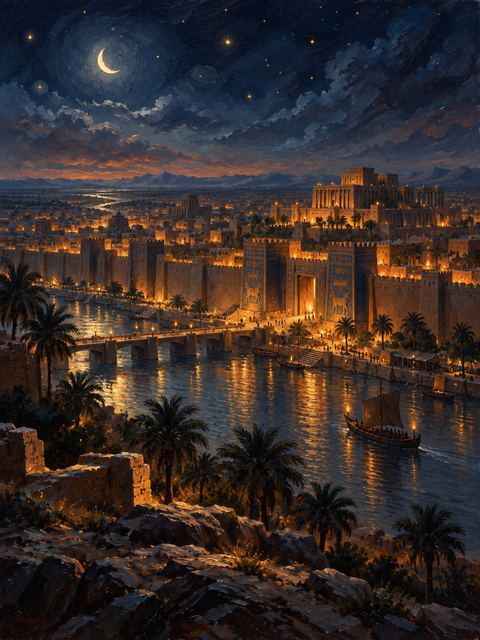
Nineveh was the capital city of the ancient Assyrian Empire, located on the eastern bank of the Tigris River in modern-day Iraq. It is first mentioned in the Bible as one of the cities founded by Nimrod, along with Rehoboth-Ir (Gen. 10:11-12). Nineveh became the capital of Assyria during the reign of Sennacherib (c. 705-681 BC) and was known for its size, power, and splendor (Jonah 3:3; 4:11).
In the book of Jonah, Nineveh is portrayed as a city of great wickedness, whose evil had come to God's attention (Jonah 1:2). Jonah was sent to preach against Nineveh, warning of its impending destruction. To Jonah's surprise, the people of Nineveh, from the king to the lowliest citizen, repented in response to his message (Jonah 3:5-9). As a result, God relented and spared the city (Jonah 3:10).
Despite this remarkable event, Nineveh remained a symbol of Assyrian power and a threat to Israel and Judah. The prophets Nahum and Zephaniah both foretold the eventual destruction of Nineveh as a judgment against Assyria's wickedness and oppression (Nah. 1:1; 2:8; 3:7; Zeph. 2:13). Nineveh fell to the Babylonians and Medes in 612 BC, marking the end of the Assyrian Empire.
In the New Testament, Jesus refers to the repentance of the Ninevites as a rebuke to his unbelieving generation (Matt. 12:41; Luke 11:30, 32).
Every mention
Genesis2 mentions
2 Kings1 mention
Isaiah1 mention
Jonah8 mentions
Nahum3 mentions
Zephaniah1 mention
Luke2 mentions
What the dictionary says
First mentioned in Gen. 10:11, which is rendered in the Revised Version, “He [i.e., Nimrod] went forth into Assyria and builded Nineveh.”
Sources
- STEPBible TIPNR · Translators Individualised Proper Names with all References · CC BY 4.0 · github.com/STEPBible/STEPBible-Data
- OpenBible.info Bible Geocoding · CC BY 4.0 · www.openbible.info/geo/
- Hitchcock's Bible Names Dictionary (1869) · Public domain