Euphrates
Where it is
35.09° N, 40.43° E · river
Mentioned most in
About this place
The Euphrates is one of the most significant rivers mentioned in the Bible, playing a crucial role in the geography, history, and prophecy of the ancient Near East. It is often referred to simply as "the River" or "Shibolet" (meaning "ear of grain") in Hebrew.
In the Garden of Eden narrative, the Euphrates is one of the four rivers that flowed from the garden (Genesis 2:14). Later, it is mentioned as part of the boundary of the Promised Land, as God promised Abraham that his descendants would inherit the land from the river of Egypt to the Euphrates (Genesis 15:18; Deu.1.7; 11:24; Joshua 1:4).
The Euphrates served as a natural boundary between the Assyrian and Babylonian empires and the kingdoms of Israel and Judah. It was the site of several significant events, such as the battle of Carchemish, where the Babylonians defeated the Egyptians (Jeremiah 46:2), and the place where Jeremiah hid a linen belt as a symbol of God's judgment on Judah (Jeremiah 13:4-7).
In the book of Revelation, the Euphrates is mentioned in connection with the sixth trumpet judgment (Revelation 9:14) and the sixth bowl judgment (Revelation 16:12), where the river is dried up to prepare the way for the kings from the east.
Throughout the Bible, the Euphrates is used as a symbol of the extent of God's promised blessings (Psalm 72:8), the reach of Israel's enemies (Isaiah 7:20; 8:7), and the future restoration of Israel (Isaiah 11:15; 27:12; Micah 7:12; Zechariah 9:10).
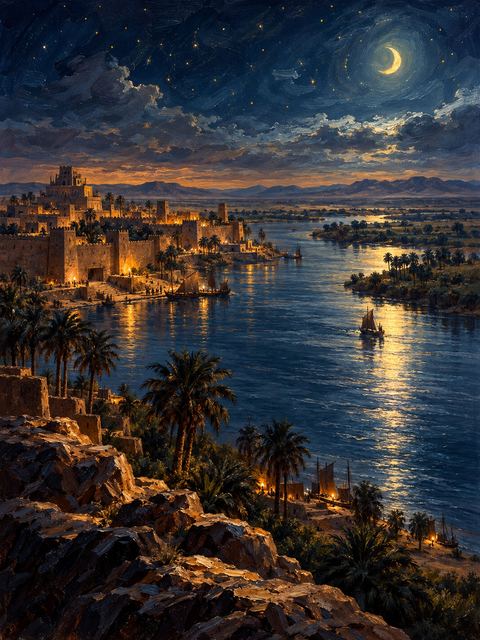
The Euphrates played a significant role in the history and commerce of the ancient Near East, with many important cities and civilizations situated along its banks, such as Babylon, Ur, and Carchemish. It was a vital source of water for irrigation and transportation, and its fertile floodplains supported agriculture and trade.
Every mention
Genesis4 mentions
Deuteronomy2 mentions
Joshua5 mentions
2 Samuel2 mentions
1 Kings3 mentions
2 Kings2 mentions
1 Chronicles4 mentions
2 Chronicles2 mentions
Ezra13 mentions
Nehemiah3 mentions
Psalms2 mentions
Isaiah4 mentions
Jeremiah9 mentions
Revelation2 mentions
What the dictionary says
Hebrew, Perath; Assyrian, Purat; Persian cuneiform, Ufratush, whence Greek Euphrates, meaning “sweet water.”
Sources
- STEPBible TIPNR · Translators Individualised Proper Names with all References · CC BY 4.0 · github.com/STEPBible/STEPBible-Data
- OpenBible.info Bible Geocoding · CC BY 4.0 · www.openbible.info/geo/
- Hitchcock's Bible Names Dictionary (1869) · Public domain