Corinth
Where it is
37.91° N, 22.88° E
Mentioned most in
About this place
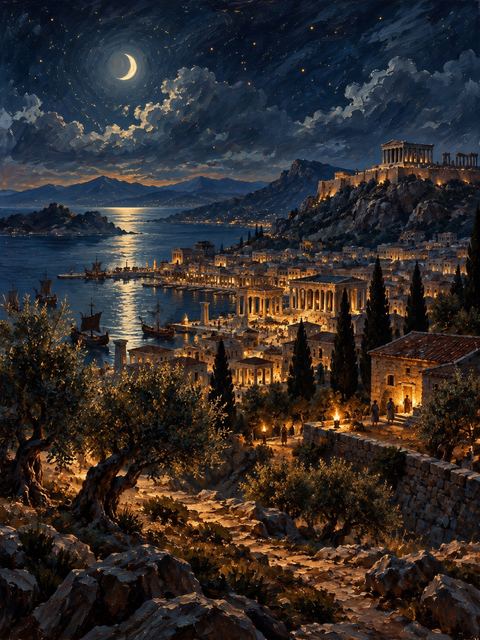
Corinth was a prominent city in ancient Greece, located on the Isthmus of Corinth, which connects the Peloponnese to the mainland. It was known for its strategic location, controlling trade routes between the Aegean and Adriatic seas. The city was famous for its wealth, luxury, and immorality.
In the New Testament, Corinth plays a significant role as the location of a Christian church founded by the apostle Paul during his second missionary journey (Act.18.1-18). Paul spent 18 months in Corinth, working as a tentmaker and preaching the gospel. Many Corinthians, including Crispus, the ruler of the synagogue, believed and were baptized (Act.18.8).
After leaving Corinth, Paul wrote two epistles to the church, known as 1 and 2 Corinthians. These letters address various issues faced by the Corinthian believers, including divisions, immorality, lawsuits, and questions about spiritual gifts, resurrection, and Christian conduct.
In Romans 16:27, Paul sends greetings to the Corinthians, indicating that he wrote the epistle to the Romans while in Corinth. In 2Ti.4.20, Paul mentions that he left Erastus in Corinth, suggesting that the city continued to have a Christian presence.
Throughout the epistles, Paul refers to the Corinthian believers with affection, calling them "saints" (1Co.1.2; 2Co.1.1) and expressing his love for them (2Co.6.11; 13:13-14). The correspondence between Paul and the Corinthian church provides valuable insights into the challenges and growth of the early Christian community in a significant Gentile city.
Every mention
Acts3 mentions
Romans1 mention
1 Corinthians2 mentions
2 Corinthians4 mentions
What the dictionary says
A Grecian city, on the isthmus which joins the Peloponnesus to the mainland of Greece.
Sources
- STEPBible TIPNR · Translators Individualised Proper Names with all References · CC BY 4.0 · github.com/STEPBible/STEPBible-Data
- OpenBible.info Bible Geocoding · CC BY 4.0 · www.openbible.info/geo/
- Hitchcock's Bible Names Dictionary (1869) · Public domain