The BibleGospel Companion

Zerubbabel

זְרֻבָּבֶ֫ל · ze.rub.ba.vel · H2216Ζοροβάβελ · Zorobabel · G2216H1 other spelling“a stranger at Babylon; dispersion of confusion” Hitchcock's 186927 mentions in 6 books, most in Ezra (10)
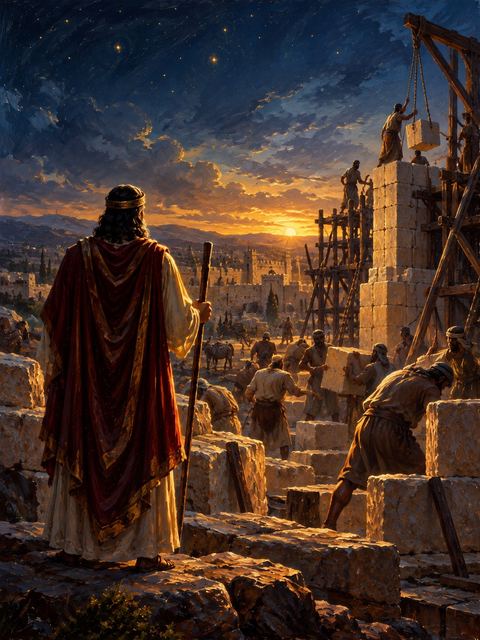
Illustration — not a likeness; generated for Gospel Companion in the app's painting style — Zerubbabel
Illustration — not a likeness; generated for Gospel Companion in the app's painting style

Who he was

Zerubbabel, also known as Sheshbazzar, was a descendant of King David who played a crucial role in the return of the Jewish exiles from Babylon and the rebuilding of the temple in Jerusalem. He is mentioned in various books of the Old Testament, including 1 Chronicles, Ezra, Nehemiah, Haggai, and Zechariah. Zerubbabel led the first group of exiles back to Jerusalem under the decree of Cyrus, king of Persia. He is listed among the leaders who returned and is credited with laying the foundation of the temple. Despite facing opposition from the Samaritans and others, Zerubbabel, along with the prophets Haggai and Zechariah, encouraged the people to complete the rebuilding of the temple. He is also mentioned in the genealogy of Jesus Christ in the Gospel of Matthew, emphasizing his importance in the messianic lineage. Zerubbabel's leadership and dedication were instrumental in reestablishing Jewish worship in Jerusalem after the Babylonian exile.

Article: STEPBible, Tyndale House Cambridge · CC BY 4.0

Family

Family relations: STEPBible, Tyndale House Cambridge · CC BY 4.0

Every mention

27 references, counted from STEPBible, Tyndale House Cambridge · CC BY 4.0 · verse text: World English Bible (public domain)
1 ChroniclesChapter 3: 1 mention1 mention
EzraChapter 1: 2 mentionsChapter 2: 1 mentionChapter 3: 2 mentionsChapter 4: 2 mentionsChapter 5: 3 mentions10 mentions
Ezra 1:8even those, Cyrus king of Persia brought out by the hand of Mithredath the treasurer, and counted them out to Sheshbazzar the prince of Judah.Ezra 1:11All the vessels of gold and of silver were five thousand four hundred. Sheshbazzar brought all these up when the captives were brought up from Babylon to Jerusalem.Ezra 2:2who came with Zerubbabel, Jeshua, Nehemiah, Seraiah, Reelaiah, Mordecai, Bilshan, Mispar, Bigvai, Rehum, and Baanah. The number of the men of the people of Israel:Ezra 3:2Then Jeshua the son of Jozadak stood up with his brothers the priests and Zerubbabel the son of Shealtiel and his relatives, and built the altar of the God of Israel, to offer burnt…Ezra 3:8Now in the second year of their coming to God’s house at Jerusalem, in the second month, Zerubbabel the son of Shealtiel, Jeshua the son of Jozadak, and the rest of their brothers the…Ezra 4:2they came near to Zerubbabel, and to the heads of fathers’ households, and said to them, “Let us build with you, for we seek your God as you do; and we have been sacrificing to him since…Ezra 4:3But Zerubbabel, Jeshua, and the rest of the heads of fathers’ households of Israel said to them, “You have nothing to do with us in building a house to our God; but we ourselves together…Ezra 5:2Then Zerubbabel the son of Shealtiel, and Jeshua the son of Jozadak rose up and began to build God’s house which is at Jerusalem; and with them were the prophets of God, helping them.Ezra 5:14The gold and silver vessels of God’s house, which Nebuchadnezzar took out of the temple that was in Jerusalem and brought into the temple of Babylon, those Cyrus the king also took out of…Ezra 5:16Then the same Sheshbazzar came and laid the foundations of God’s house which is in Jerusalem. Since that time even until now it has been being built, and yet it is not completed.
NehemiahChapter 7: 1 mentionChapter 12: 2 mentions3 mentions
HaggaiChapter 1: 3 mentionsChapter 2: 4 mentions7 mentions
ZechariahChapter 4: 4 mentions4 mentions
MatthewChapter 1: 2 mentions2 mentions

What the dictionary says

The seed of Babylon, the son of Salathiel or Shealtiel (Hag. 1:1; Zorobabel, Matt. 1:12); called also the son of Pedaiah (1 Chr. 3:17-19), i.e., according to…

Easton's Bible Dictionary (1897)
Read the article →

Sources