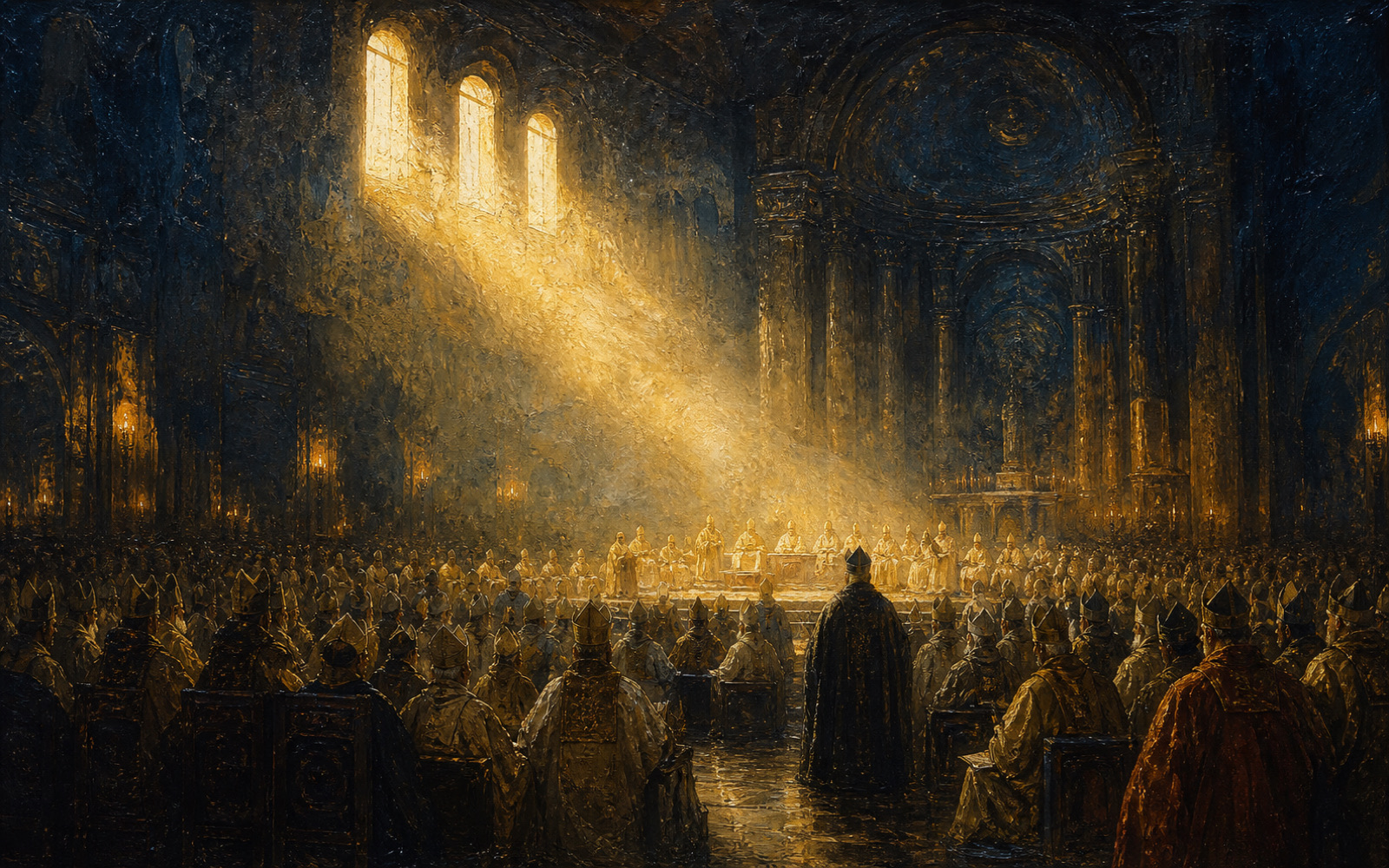
It may be the most misremembered meeting in history. A novel told millions that bishops voted Jesus into godhood here — a close vote, a new Bible, banned gospels. Every one of those claims is checkable. This exhibit checks them — against the people who were there, and the people who wrote before it.
“Until that moment, Jesus was viewed by his followers as a mortal prophet … a great man, but a man.”
Bart Ehrman is an agnostic — no friend of orthodoxy. Asked about the Da Vinci version of Nicaea, here is what he wrote:
“This was not a council that met to decide whether or not Jesus was divine … everyone at the Council — in fact, just about every Christian everywhere” already agreed that Jesus was divine, the Son of God.
What Nicaea actually debated was not whether the Son is God — but how to say what the church already worshiped. To see that, we have to leave the year 325 entirely. Keep scrolling. You are about to travel backward.
Watch the year plate in the corner. Each room you walk through is older than the council — each witness wrote before the bishops ever met.
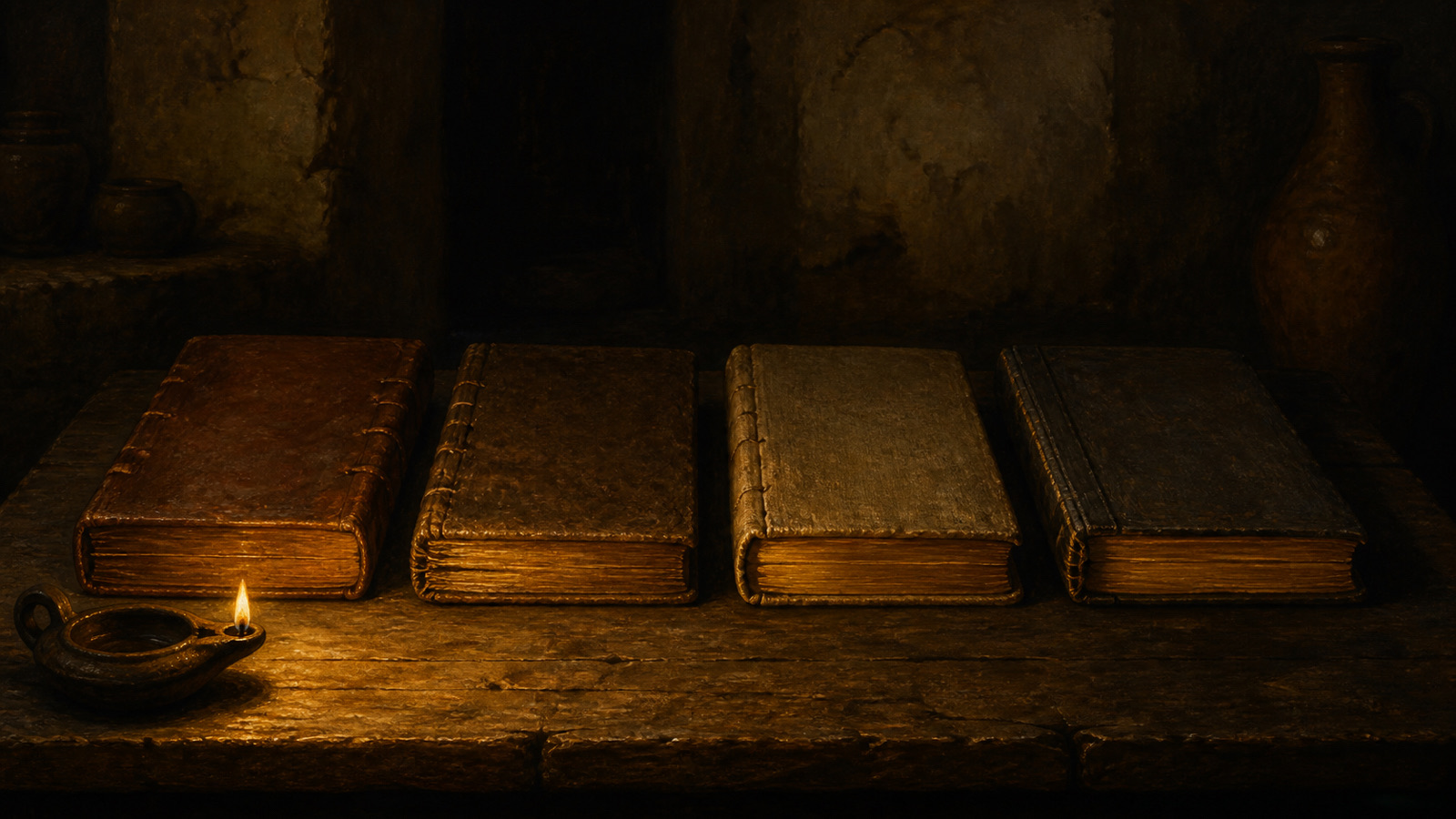
A century and a half before Nicaea, the fourfold Gospel is settled.
“It is not possible that the Gospels can be either more or fewer in number than they are.”
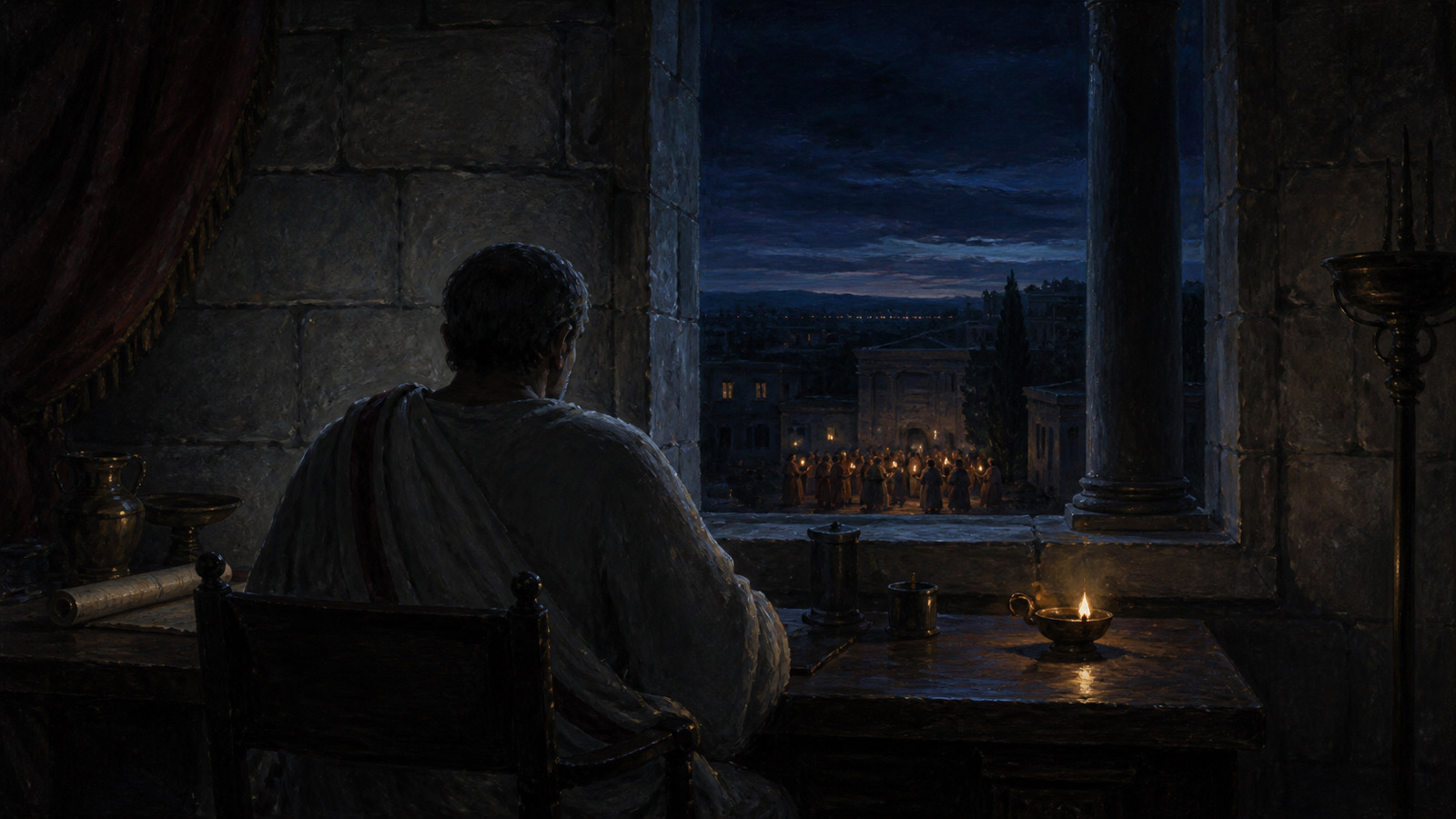
A pagan magistrate, writing to the emperor Trajan about the Christians he interrogated — the little lights below his window met before dawn.
“[The Christians] were accustomed to meet on a fixed day before dawn and sing responsively a hymn to Christ as to a god.”
Pliny had no reason to flatter the church — he was prosecuting it. Two centuries before Nicaea, worshiping Christ as God is what identified Christians to Rome.
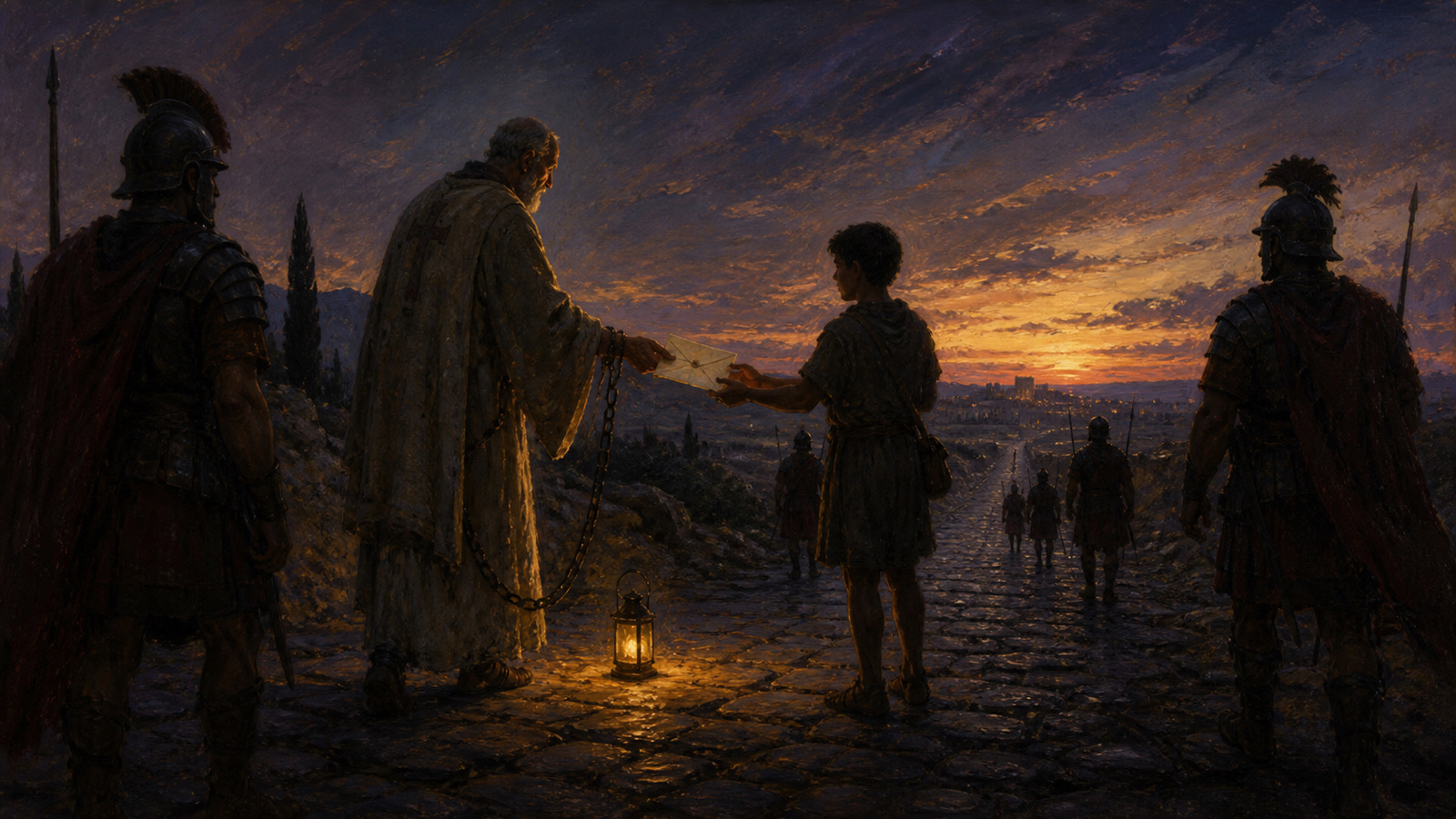
A bishop under guard, on the road to his execution in Rome, handing his letters to the churches.
“For our God, Jesus Christ, was, according to the appointment of God, conceived in the womb by Mary…”
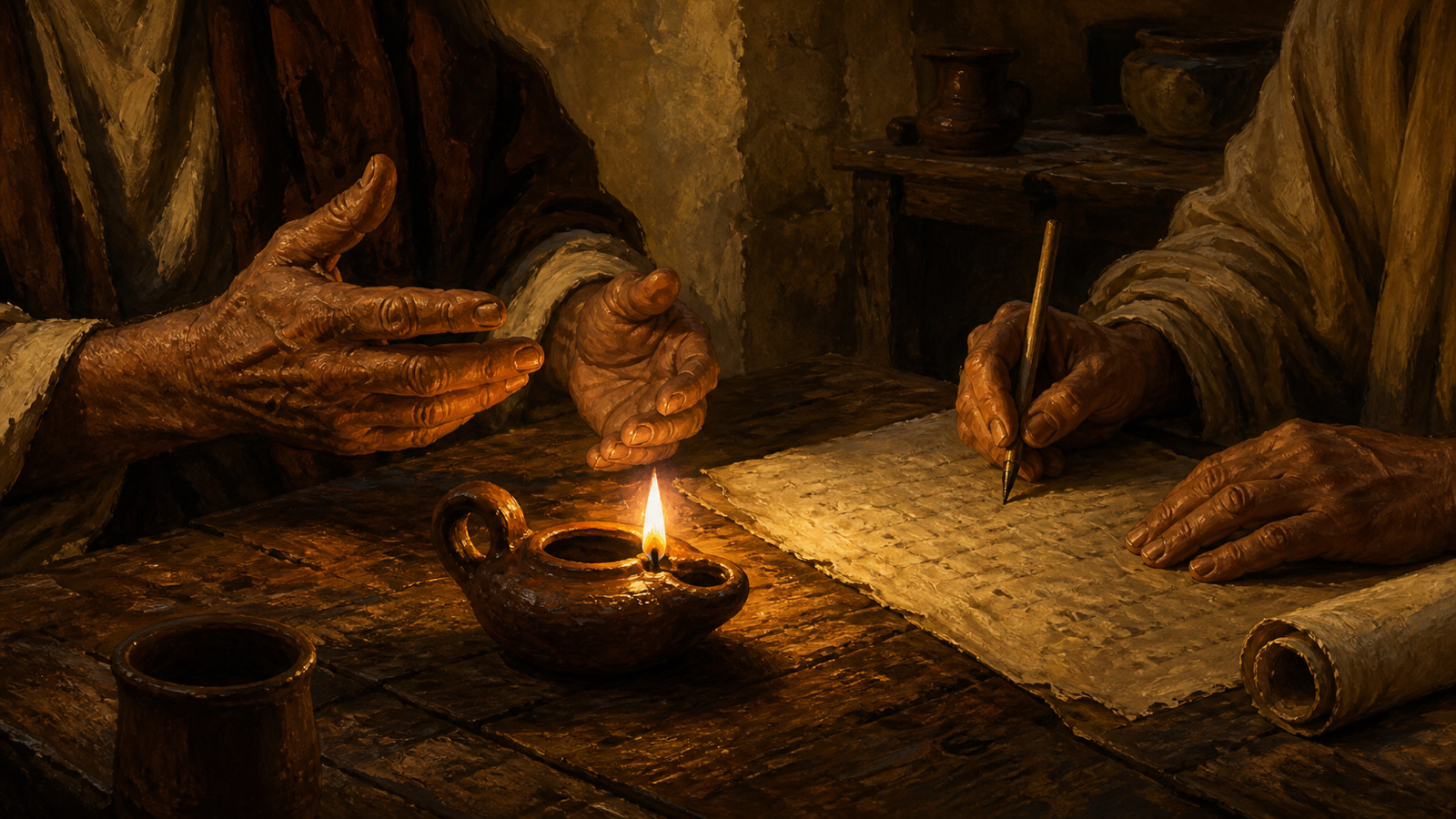
A letter to Corinth, dictated while eyewitnesses of Jesus still lived.
“A higher Christology than Paul already expresses in 1 Corinthians 8:6 is scarcely possible.”
And behind all of them, the apostles' own pages — written in the first century:
The plate reads two hundred and seventy
years before the council opened its doors.
Whatever Nicaea did — it did not invent this.
Now scroll forward. Back to 325 — into the hall itself.
Around three hundred bishops gathered.
The eyewitness Eusebius counts “more than two hundred and fifty”; tradition remembers 318. Many carried the scars of the persecutions — they had not suffered for a man they thought merely mortal.
Five objected — to one word.
Socrates Scholasticus records that only five balked at homoousios — “of one substance.” Not at Jesus' divinity. At the vocabulary.
Three of the five signed anyway.
Two refused.
Theonas of Marmarica · Secundus of Ptolemaïs
318 signed. Two refused.
That is not close.
Socrates Scholasticus, Ecclesiastical History I.8 · Eusebius, Life of Constantine III.8
Nicaea passed twenty canons. Not one of them mentions which books are Scripture.
“The New Testament canon was voted in at Nicaea.”
Never discussed. Even Ehrman rejects the idea “that it was at the Council of Nicea that the canon of the New Testament was decided”: “That too is wrong.” The fourfold Gospel was already settled by AD 180 — that was Irenaeus' room in the Descent, a hundred and forty-five years before the council.
“Constantine commissioned a new Bible that cut the human-Jesus gospels.”
The letter survives — and says the opposite. Constantine ordered copies, of the Scriptures the church already used:
“The 'lost gospels' — Thomas, Judas, Mary — were banned at Nicaea.”
Never taken up. Those texts were written long after the apostles and never widely received. They were not “lost” at Nicaea — they were simply never the church's books.
The internet's favorite Nicaea story — Santa slapping the heretic — is legend. It appears centuries after the council; no contemporary account records it, and the early attendance lists do not even securely place Nicholas in the room. We check the myths we like by the same rule as the myths we don't. If we ask you to trust the record, we owe you the record — all of it.
Four things. All on the record.
Confessing the Son as “of one substance with the Father” — homoousios.
With an anathema against the slogan “there was a time when he was not.”
A common rule for the church's central feast.
Church order — clergy discipline, readmitting the lapsed. Nothing about the Bible's books.
True. The word is not in Scripture; the teaching is — and we should say both plainly. The council's term is a fence around sentences the apostles had already written:
He convened it, funded it, pressed for unity — and then the aftermath dismantles the theory: within a few years Constantine recalled the exiled Arius, and by AD 335 he banished Athanasius — Nicaea's great defender. An emperor who controlled the doctrine would not have spent the next decade exiling its champions. The court wavered. The confession didn't.
“God of God,
Light of Light,
very God of very God;
begotten, not made,
being of one substance with the Father.”
The Nicene Creed, AD 325
Not the birthplace of a doctrine. A fence built around a confession the church had sung since before dawn, since Pliny, since Paul.